William Edwards Deming was born on October 14, 1900 .He was an American engineer, statistician, professor, author, lecturer, and management consultant. He popularized Dr. Shewhart’s PDCA (Plan-Do-Check-Act)..He is best known for his work in Japan after WWII, particularly his work with the leaders of Japanese industry. The highest quality award in Japan, the first of its kind in the world is named after him to commemorate Dr Deming’s contribution to Japan and administered by The Union of Japanese Scientists and Engineers (JUSE).
Dr. Deming developed his complete philosophy of management, which he encapsulated into his “fourteen points” ,14 key principles for management to follow for significantly improving the effectiveness of a business or organization. The points were first presented in his book Out of the Crisis. Below is the condensation of the 14 Points for Management as they appeared in the book.
- Create constancy of purpose toward improvement of product and service, with the aim to become competitive and to stay in business, and to provide jobs.
- Adopt the new philosophy. We are in a new economic age. Western management must awaken to the challenge, must learn their responsibilities, and take on leadership for change.
- Cease dependence on inspection to achieve quality. Eliminate the need for inspection on a mass basis by building quality into the product in the first place.
- End the practice of awarding business on the basis of price tag. Instead, minimize total cost. Move toward a single supplier for any one item, on a long-term relationship of loyalty and trust.
- Improve constantly and forever the system of production and service, to improve quality and productivity, and thus constantly decrease costs.
- Institute training on the job.
- Institute leadership . The aim of supervision should be to help people and machines and gadgets to do a better job. Supervision of management is in need of overhaul, as well as supervision of production workers.
- Drive out fear, so that everyone may work effectively for the company .
- Break down barriers between departments. People in research, design, sales, and production must work as a team, to foresee problems of production and in use that may be encountered with the product or service.
- Eliminate slogans, exhortations, and targets for the work force asking for zero defects and new levels of productivity. Such exhortations only create adversarial relationships, as the bulk of the causes of low quality and low productivity belong to the system and thus lie beyond the power of the work force.
- Eliminate work standards (quotas) on the factory floor. Substitute leadership.
- Eliminate management by objective. Eliminate management by numbers, numerical goals. Substitute leadership.
- Remove barriers that rob the hourly worker of his right to pride of workmanship. The responsibility of supervisors must be changed from sheer numbers to quality.
- Remove barriers that rob people in management and in engineering of their right to pride of workmanship. This means, inter alia, abolishment of the annual or merit rating and of management by objective (see Ch. 3).
- Institute a vigorous program of education and self-improvement.
- Massive training is required to instill the courage to break with tradition. Every activity and every job is a part of the process.
Famous Quotes:
- “It is not enough to do your best; you must know what to do, and then do your best.”
- “A person and an organization must have goals, take actions to achieve those goals, gather evidence of achievement, study and reflect on the data and from that take actions again. Thus, they are in a continuous feedback spiral toward continuous improvement”
- “If you can’t describe what you are doing as a process, you don’t know what you’re doing.”
- “Profit in business comes from repeat customers, customers that boast about your project or service, and that bring friends with them.”
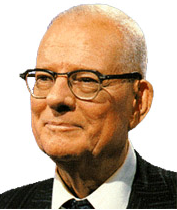

 Dr. Joseph M Juran
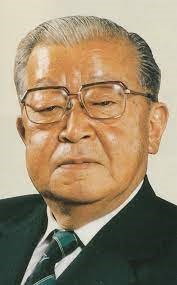 Dr Kaoru Ishikawa